
The following white paper provides a detailed review of real-time MIL-STD-1553 and ARINC Ethernet Converters.
Avionics Ethernet Converters
Switched Ethernet is the dominant network architecture in modern avionics. However, a simple fact remains: Many platforms, especially in defense, cannot design out legacy I/O connections due to backward-compatibility requirements for communications or weapon systems (stores). As Ethernet continues to reshape avionics, methods for integrating legacy I/O or networks (such as MIL-STD-1553) are also evolving.
For the scope of this discussion, we will primarily focus on 1553 as a representative legacy I/O or network, understanding that the same Ethernet bridging principles apply to ARINC 429, discrete/DAC I/O, or serial interfaces. For many VPX or Com Express (small form factor) style computers or flightline systems (e.g. rugged laptops), Ethernet ports are commonly integrated on the computer’s motherboard or main Single Board Computers (SBCs), whereas lower-volume I/O requirements of the system are typically implemented with COTS PCI Express (PCIe) interface cards (e.g. XMC, PMC, Mini-PCIe daughtercards, etc.).
With interface cards, several challenges arise due to new system requirements for interoperability (e.g., MOSA/SOSA), as well as size and cost. These include: the increasing scarcity of expansion card availability in many small computer systems; the frequent need for embedded systems to upgrade processing power while facing constraints imposed by legacy I/O requirements; evolving backplane standards; and the difficulty of integrating wiring bundles for legacy I/O.
A refined approach has taken hold: connecting specialty I/O sources directly to an Ethernet switch via small “brick” converter devices. This method essentially uses the Ethernet network as a pseudo-backplane via small, rugged bridge devices or in-line cable assemblies. This “appliance” approach offers significant advantages, including near-limitless software portability, simpler hardware configurations, power savings, and reduced wiring complexity.
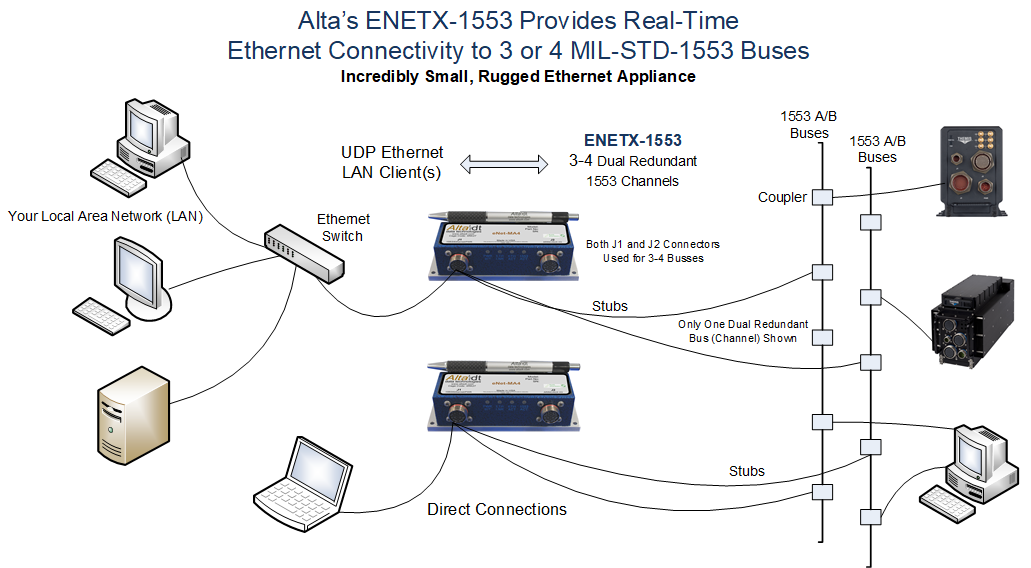
Figure 1 shows a simple Ethernet network with Alta’s ENET-1553™ product (1553 <-> Ethernet Converter) as an end-point controller or data collector.
Design Trade-offs: From PCIE Backplanes to Networked I/O
Shifting from traditional interface cards inside a computer to network endpoint I/O boxes involves a fundamental trade-off: exchanging the real-time PCIE backplane memory access of an internal card for the flexibility of a packet-based network topology. While MIL-STD-1553 operates at 1 Mbps and typical Ethernet offers 1000 Mbps, the raw bit-rate difference alone does not capture the full picture of bridging performance. Critical protocol characteristics and packet-processing demands significantly alter the expected gains. Specifically, MIL-STD-1553’s inherent 4-12 microsecond command-response timing between Bus Controller (BC) and Remote Terminal (RT) computers, along with its frequent transmission of short, asynchronous packets (often 2000+ per second), can impose substantial Ethernet packet-processing overhead. Consequently, when translating to Ethernet, these factors invariably introduce packet or frame delays (typically in the millisecond range), meaning the actual throughput improvement does not scale linearly with the bit-rate ratio and is often substantially lower.
Internet Protocol (IP) packet processing performance of an operating system (OS) often struggles with high packet rates, especially above 2000-5000 Hz. Lower-cost systems, in particular, may feature poorly optimized Ethernet integration, offloading much of the packet processing burden onto the host OS. This delay, introduced by the OS stack or switch routing, is termed “path delay.”
Application demands can further strain system capabilities. For instance, if a user application needs to perform both a read and a write operation (e.g., for ACK-NAK protocols or data massaging) for each 1553 data packet, the effective packet frequency for the application could double the 1553 bus rate. While an optimized endpoint device like the ENET-1553 can process Ethernet memory IP read/write requests to the 1553 bus in real time (<20 uSec), system designers must carefully consider their host system’s OS TCP/IP stack and LAN switch processing capabilities to ensure alignment with application requirements.
To help quantify these system-level effects, extensive testing at Alta across various Microsoft Windows™ and Linux systems (ARM and x86) has led to the following sample formula. This estimates the number of 1553 messages per second (MsgsPerSecond) that can be reliably processed by an ENET-1553 device connected to your computer:
MsgsPerSecond = 1 / (10 * PathDelayInSeconds)
For example, a system with a Path Delay of 100 microseconds would have an expected sustainable message processing rate of approximately 1000 messages per second. The ’10’ factor in the denominator accounts for various system overheads and latency beyond the raw path delay, providing a conservative estimate for reliable operation. Note that while monitoring (data sniffing or capture) at higher rates may seem possible, message loss can occur if the application cannot read messages faster than they arrive on the 1553 bus. This may seem counterintuitive given the 1000x-fold increase in bit rate in 1553 vs. Ethernet network speeds, but the key factor in system design is packet-processing capability, not bit rate.
Shaping and Optimizing Ethernet Packet Performance for Networked I/O
Adopting Ethernet-based I/O solutions requires performance optimization strategies. Virtual Local Area Networks (VLANs) are a “best practice” for switch configuration, enabling effective management and shaping of IP traffic. This improves performance between physical ports, such as those on the ENET device and the client computer. Notably, VLANs are widely supported by most switches, including cost-effective models (under $200), many of which offer robust capabilities driven by advancements in the gaming industry.
VLANs operate by configuring a switch’s physical ports (which then handle IP address resolution via ARP) to establish a virtual, direct data pipe—effectively a mini-LAN. This isolates traffic between the ENET device and the client computer, blocking other network congestion and ensuring a cleaner, dedicated path.
Beyond network configuration, the choice of Network Interface Controller (NIC) is critical. Standard motherboard NICs are often not optimized for high packet throughput. Using a high-end PCIe NIC, for instance, can yield a 50-200% improvement in packet throughput compared to an integrated motherboard NIC. This can be pivotal for maximizing real-time data exchange. Furthermore, while low-cost processors (e.g., ARM-based) are attractive for size and general processing, their integrated NIC implementations often suffer from long Ethernet path delays, which impact overall system responsiveness.
Network Centric Avionics Architectures
Alta Data Technologies (Alta) was a pioneer in this area, applying the concept to 1553 and ARINC connections with their ENET-1553™ design. Their innovative design uses a thin server, real-time IP/UDP protocol engine as its “backplane.” This allows memory packet access at speeds approaching those of traditional PCIE backplanes, which is generally more than adequate for control and monitoring applications. The thin-server methodology significantly shortens the total round-trip transmission time by optimizing IP stack processing. This next-generation, real-time Ethernet-to-1553 design is illustrated in Figure 2.
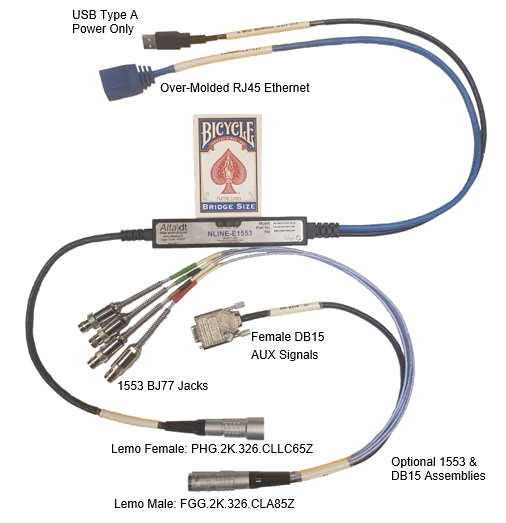
Figure 2: Next Generation Real-Time Ethernet <-> 1553 Designs
In addition to providing near-real-time data access, Ethernet appliances offer much enhanced software portability, as IP/UDP “socket” communications are natively supported in virtually every OS, including most DO178 OS requirements. This means that a client application can be readily ported to almost any computer system, and the end-point device can be reused while the main processing computer can be upgraded as requirements demand.
Alta’s ENET-1553 is a rugged, compact appliance (comparable in size to a candy bar) featuring a standard 5-30 VDC power input, 10/100/1000 Ethernet connectivity, and optional Power Over Ethernet (PoE) for eliminating power cabling. Alta has incorporated advanced features such as Signal Capture (to record the raw 1553 signal for integrity analysis), automatic BC/RT image loading to simplify setup, and an automatic Bus Monitor mode with IRIG or PTP time stamping to provide real-time bridging between 1553 and Ethernet networks without any programming or host interaction. The device can offer end-point control for almost any 1553 system, such as stores management, power controls, generic maintenance or data logging monitor, or programming (memory loader verifier – MLV) ports for deployed systems.
Advancing Implementation Options
Born from years of experience and market adjustments, Alta engineers have also developed the NLINE (in-line) product. Jake Haddock, CTO of Alta, reflects, “Along with our ever-expanding interface card product line, we’d always been eyeing an NLINE type product as a derivative of our ENET concept. The ENET distinguishes itself with a real-time, FPGA Ethernet IP processing engine in front of our 1553 protocol engine. Ethernet IP packets are turned around in less than 10- 20 µs, which is usually much faster than even RTOS IP stacks can process packets at 1G – so our product is not the diminishing variable in the connection path delay.”
Figure 3: Alta’s ENET & NLINE 1553 <-> Ethernet Bridge Devices
Haddock further explains the motivation behind the NLINE’s rugged design: “But a single package cannot satisfy all deployment requirements. For the NLINE product line, we finally settled on a packaging technology that would over-mold the ENET electronics with multiple molding layers, including a copper-sheeting layer to meet EMC requirements. The learning curve and capital investment were significant, but we were really happy with our final standard product, which passes full MIL-810 shake-n-bake, MIL-461 EMC, 60,000 ft altitude, and even full operational water immersion.” The NLINE product is also available with USB or Thunderbolt™ host interfaces instead of Ethernet, so the product lines support the full range from lab to deployment with the same software.
Alta customers have deployed 1000s of their ENET and NLINE products on airborne platforms such as C-130s, Black Hawk helicopters, drones, and MLV/test flightline applications. Products have been tested to MIL-STD-704F, 810G, 461F, and DO160 Sec 22. Configuration options can include conditioned or raw aircraft power options, 1-4 1553 channels, and combined ARINC, with delivery often in 2-4 weeks. Small, low-cost, high-performance, Ethernet, USB, and Thunderbolt® COTS converters.
Summary
As modern avionics system designs continue to advance, the adaptation of 1553 networks to an Ethernet-centric topology will become increasingly important. Appliances such as ENET-1553 and the later-developed ruggedized NLINE family, with its various interface options, along with the strategic use of VLANs for optimized IP traffic management and consideration of high-performance PCIe NICs for enhanced packet throughput, play a crucial role in fulfilling this requirement. A thin-server design, which provides direct access to I/O buffers via IP/UDP requests, eliminates a layer of packet processing and can significantly enhance system design options, maximize application portability, and improve data application performance. These next-generation appliances and networking best practices offer greater flexibility in system design topologies and help reduce both initial and recurring development costs.
About the Author
Jake Haddock is a founder and CTO at Alta Data Technologies with over 30 years’ experience in MIL-STD-1553 and Ethernet FPGA designs, including advanced avionics Ethernet IP/UDP “pump” FPGA protocol engines.
